
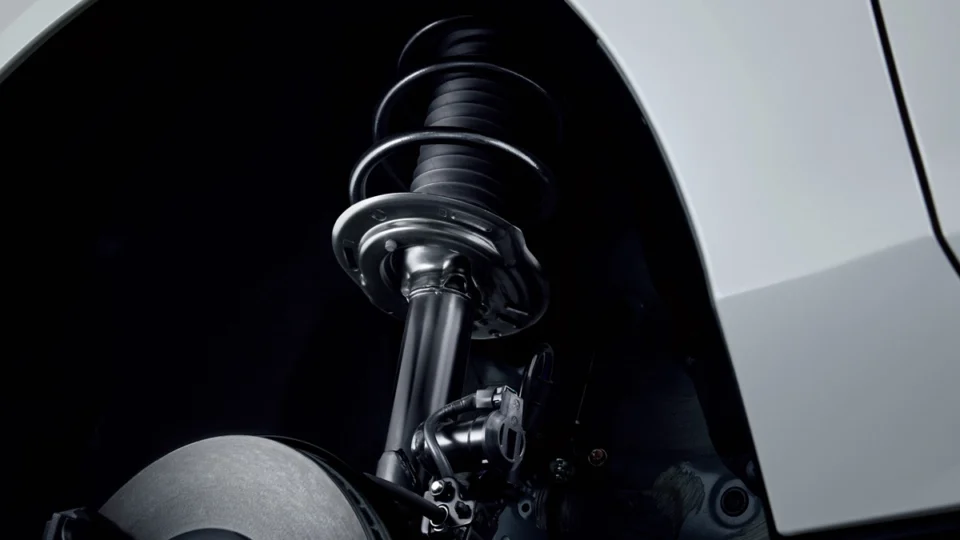
Adaptive dampers have moved from luxury-only features to mainstream automotive technology. They promise a smoother ride, sharper handling, and the flexibility to tailor your car’s behavior at the push of a button. But what actually changes when you switch between modes like Comfort, Sport, or Track? The answer lies in how these systems actively adjust suspension behavior in real time.
What Are Adaptive Dampers?
Adaptive dampers, also known as electronically controlled shock absorbers, are suspension components that can vary their damping force based on driving conditions and selected modes.
Traditional dampers have fixed characteristics. Adaptive dampers, by contrast, use sensors and electronic controls to continuously adjust how stiff or soft the suspension feels.
Key Components
- Sensors that monitor wheel movement, steering input, speed, and body motion
- Control unit that processes data and determines damping adjustments
- Actuators or valves inside the damper that change fluid flow
The system reacts in milliseconds, making adjustments that would be impossible with conventional suspension setups.
How Damping Actually Works
To understand adaptive dampers, it helps to know the basics of damping.
A shock absorber controls how quickly a spring compresses and rebounds. It does this by forcing fluid through small internal passages.
- Compression damping controls how the suspension compresses when hitting a bump
- Rebound damping controls how quickly it returns to its normal position
Adaptive dampers change these forces dynamically, altering how the car responds to road conditions and driver inputs.
Drive Modes and What They Change
Most vehicles equipped with adaptive dampers offer selectable drive modes. While names vary by manufacturer, the underlying principles are similar.
Comfort Mode
Comfort mode prioritizes ride quality over sharp handling.
What changes:
- Softer damping settings
- Increased suspension travel feel
- Reduced transmission of road imperfections
Effect on driving:
- The car feels more relaxed and compliant
- Bumps and potholes are absorbed more gently
- Body movement like leaning and pitching increases slightly
This mode is ideal for daily commuting, long highway drives, and rough urban roads.
Sport Mode
Sport mode tightens everything up for a more responsive feel.
What changes:
- Increased damping stiffness
- Reduced suspension movement
- Faster response to steering inputs
Effect on driving:
- Sharper cornering with less body roll
- More direct road feedback
- Slightly firmer ride over bumps
This mode suits spirited driving on twisty roads where control matters more than comfort.
Sport Plus or Track Mode
Track-oriented modes push the system to its limits.
What changes:
- Maximum damping stiffness
- Minimal suspension travel
- Aggressive response calibration
Effect on driving:
- Extremely flat cornering
- Instant reaction to steering and braking
- Noticeably harsh ride on regular roads
This mode is designed for smooth surfaces like racetracks, not everyday driving.
Eco or Normal Mode
Some vehicles include a balanced setting between comfort and sport.
What changes:
- Moderate damping levels
- Focus on efficiency and smoothness
Effect on driving:
- Predictable and stable ride
- Balanced comfort and control
- Reduced energy consumption in some systems
Real-Time Adjustments Beyond Modes
Even within a selected mode, adaptive dampers continuously adjust based on real-time data.
Inputs the System Monitors
- Vehicle speed
- Steering angle
- Brake pressure
- Acceleration and cornering forces
- Road surface irregularities
What Happens in Practice
For example, while driving in Comfort mode:
- The system may stiffen the outer suspension during cornering to reduce roll
- It can soften damping when cruising on smooth highways
- It reacts instantly to potholes to minimize impact
This means modes are not fixed settings but rather baseline behaviors that the system builds upon.
Types of Adaptive Damping Technologies
Not all adaptive dampers work the same way. Different manufacturers use varying technologies to achieve similar results.
1. Solenoid Valve Systems
These adjust damping by controlling fluid flow through electronically operated valves.
- Widely used and cost-effective
- Offers quick response times
2. Magnetorheological Dampers
These use fluid that changes viscosity when exposed to a magnetic field.
- Extremely fast adjustments
- Found in high-performance vehicles
3. Air Suspension Integration
Some adaptive systems are paired with air suspension.
- Allows ride height adjustment
- Adds another layer of comfort and control
How Adaptive Dampers Improve Driving
Adaptive dampers are not just about switching modes. They enhance multiple aspects of vehicle performance.
Ride Comfort
- Smooths out uneven roads
- Reduces vibrations felt inside the cabin
Handling and Stability
- Minimizes body roll during cornering
- Improves tire contact with the road
Safety
- Enhances braking stability
- Maintains control during sudden maneuvers
Versatility
- One car can feel like multiple vehicles depending on the mode
Common Misconceptions
1. Stiffer Always Means Better
A stiffer suspension improves handling but reduces comfort. The best setting depends on driving conditions.
2. Modes Only Affect Suspension
In many cars, drive modes also adjust:
- Throttle response
- Steering weight
- Transmission behavior
3. Adaptive Dampers Eliminate Body Roll Completely
They reduce body movement but do not eliminate it entirely. Physics still applies.
When to Use Each Mode
Choosing the right mode depends on your driving situation.
Use Comfort Mode When:
- Driving on rough or uneven roads
- Taking long highway trips
- Prioritizing passenger comfort
Use Sport Mode When:
- Driving on winding roads
- Wanting sharper steering response
- Seeking a more engaging drive
Use Track Mode When:
- On a racetrack
- Driving aggressively on smooth surfaces
Use Normal Mode When:
- You want a balanced everyday setting
Maintenance and Longevity
Adaptive dampers are more complex than traditional systems, but they are generally reliable.
Maintenance Tips
- Regularly inspect suspension components
- Address warning lights promptly
- Avoid prolonged driving on damaged roads
Replacement Costs
Adaptive dampers are more expensive to replace than standard ones, but their performance benefits often justify the cost.
Are Adaptive Dampers Worth It?
For most drivers, adaptive dampers offer a noticeable improvement in both comfort and performance.
They are especially valuable if you:
- Drive in varied conditions
- Appreciate both comfort and sporty handling
- Want a customizable driving experience
However, if you primarily drive in consistent conditions and do not switch modes often, the benefits may be less pronounced.
FAQ Section
1. Do adaptive dampers make a big difference in daily driving?
Yes, especially on uneven roads. The system continuously adjusts to improve ride comfort and stability.
2. Can adaptive dampers fail or wear out?
Like any mechanical component, they can wear out over time, but they are designed for long-term durability.
3. Is it safe to switch modes while driving?
Yes, most systems are designed to allow seamless switching between modes while the vehicle is in motion.
4. Do adaptive dampers improve fuel efficiency?
Indirectly, in some modes. Softer settings can reduce rolling resistance slightly, but the impact is minimal.
5. Are adaptive dampers only for sports cars?
No, they are now common in sedans, SUVs, and even some compact vehicles.
6. How do I know if my car has adaptive dampers?
Check for selectable drive modes or consult your vehicle specifications.
7. Can adaptive dampers be upgraded or retrofitted?
In most cases, retrofitting is complex and expensive. It is typically better to purchase a vehicle equipped with them from the factory.
